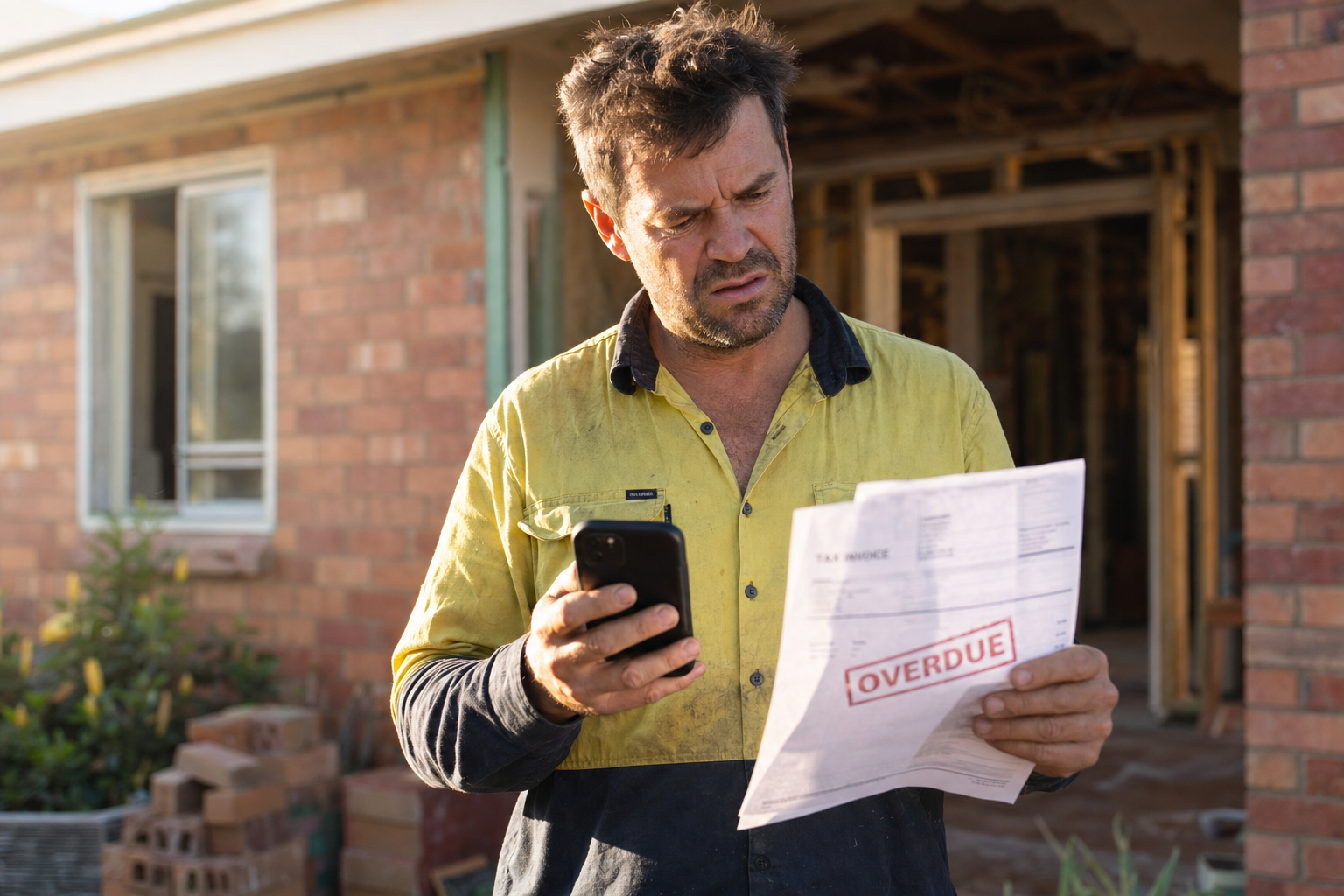
You've done the work. The job's finished, done well, and invoiced professionally. Then the payment date comes and goes. And goes. Now you're sitting here wondering if you're being too pushy chasing them, or if you should just let it go. You're frustrated, you're out of pocket, and every day that passes feels like permission to do nothing.
Here's the thing: getting paid isn't rude. It's your right. You delivered the service. They agreed to pay. Being straightforward about money is professional, not aggressive. The problem is most tradies either never bring it up (and resent them silently) or they chase too hard too fast (and feel awkward about it). There's a middle ground that works.
This guide walks you through the whole thing: how to prevent late payments before they happen, how to chase someone without being a doormat or a nuisance, and what your actual legal options are in Australia when nothing else works.
This is the most important section because prevention eliminates chasing entirely. If you set expectations upfront, the client plans to pay. If you don't, they treat payment as optional.
Payment on completion for smaller jobs:
For callouts, repairs, and anything under $500, ask for payment before you leave site. This is the norm for many trades and it's completely reasonable. You say "I'll need payment before I leave" when you arrive, and it's done. No invoice chasing, no awkward follow-ups. The client expects it and you're protected. They can pay by card, transfer, or cash — just make sure you get it.
Written payment terms on your quote:
"Payment due within 7 days of invoice" on your quote means they agreed to it before work started. You've got something to point to when payment is late. It's not aggressive — it's documented agreement. Without written terms, you're just guessing what they expect and they're guessing what you expect. Written terms eliminate the guessing.
Deposits for bigger jobs:
For jobs $500 and up, ask for a deposit upfront. 30–50% is standard. This covers your materials costs, shows the client is serious (dreamers don't want to put money down), and sets the tone that you're a business, not a favour. If a client refuses a deposit for a $5,000 bathroom reno, that's a warning flag. They might not pay at all. Better to find out early.
Progress payments for large projects:
Multi-week jobs like bathroom renos, deck builds, or structural work shouldn't pile up one giant invoice at the end. Invoice at milestones: "50% on completion of plumbing rough-in, 50% on completion and handover." Don't let $15,000 sit unpaid for weeks while you're waiting for it. Get money in regular, in small chunks. The client has to think about paying, but it's never one huge amount, and you're not waiting.
When you tell a client upfront "Payment due within 7 days of invoice," they mentally budget for it. They're planning. They're not surprised or annoyed. Compare that to finishing work, sending an invoice, and the client suddenly realising they've got a bill due next week and they're not ready. One scenario gets paid on time. The other one gets chased.
The difference is in the framing. You're not asking them for money. You're saying "Here are the payment terms." They agreed to work under those terms. Now you're just asking them to stick to what they agreed to.
Payment is due. It doesn't arrive. Now what? Here's a sequence that works without being pushy.
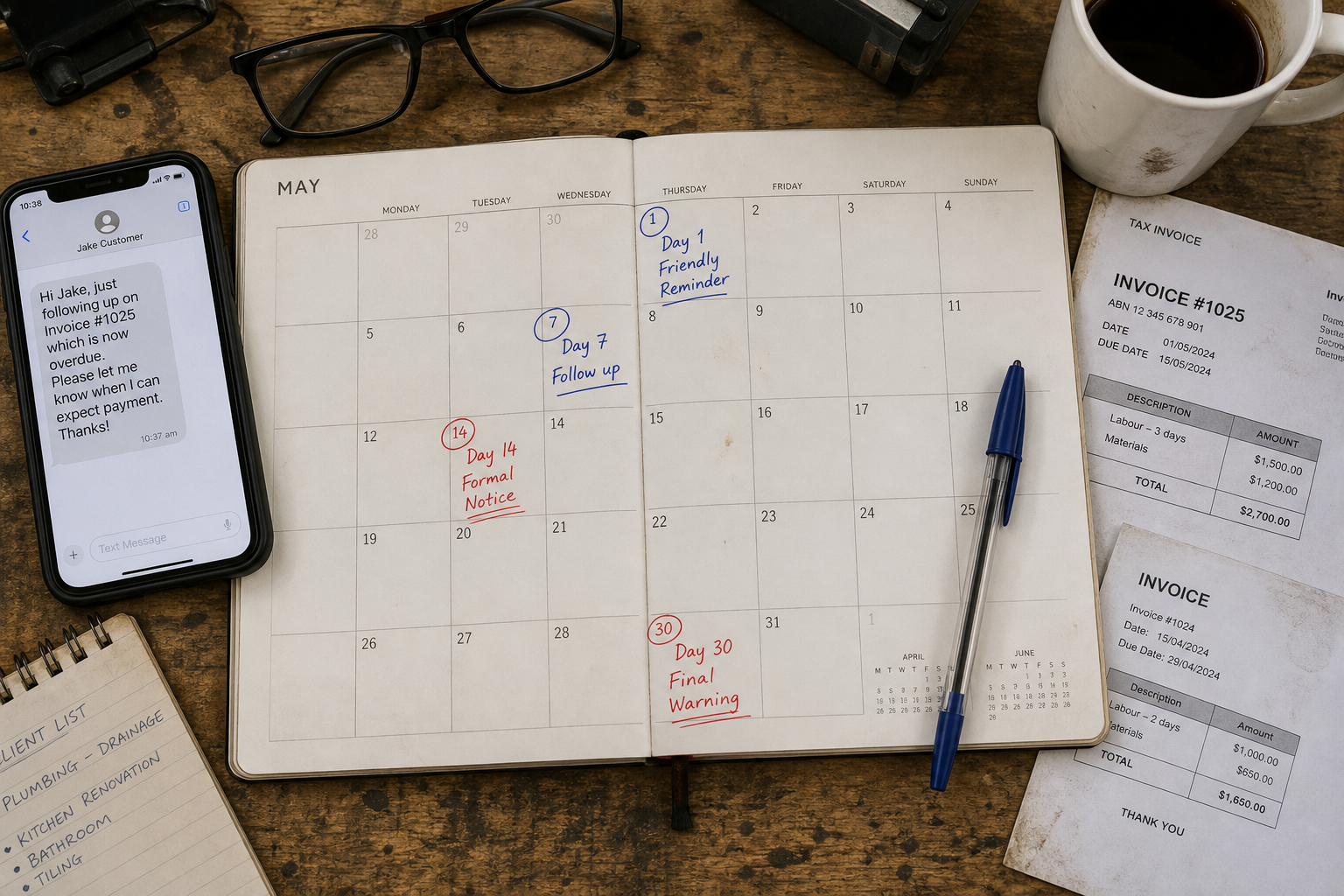
Day of: Send the invoice immediately:
Not tomorrow, not at the end of the week. The moment the job is done, send the invoice. This is your first touch. Most people will think about paying it once they've got it in hand, but if you wait three days to send it, you've already lost momentum. Send it the same day while the work is fresh in their mind and they're thinking about you anyway.
1–3 days after due date: Friendly nudge:
The due date passes. Give them 1–3 days (people are busy, things slip through) and then send a friendly message. Email works, text works better. "Hey, just checking you got the invoice — sometimes they end up in spam. Let me know if you need anything." You're giving them a face-saving excuse. They don't feel attacked. You're helping them remember. Most payments arrive at this stage.
7 days overdue: Text message, slightly firmer:
A week past due. Still no payment. Text message works better than email for most tradie clients — it's more direct and harder to ignore. "Hi, just following up on the invoice from [date]. When can we expect payment?" You're not angry. You're not begging. You're just asking a simple question: when? This is still professional and straightforward.
14–30 days: Phone call, direct conversation:
It's been two weeks or more. Time to pick up the phone. Text and email are easier to ignore. A phone call is harder to dodge and it changes the tone. "Hi, we need to sort out payment on this invoice. What's going on?" You're not rude. But you're also not apologetic. They owe you money. Being straightforward is professional, not aggressive. Ask what the hold-up is. Is it a dispute? Did they forget? Do they need a payment plan? Find out, and solve it.
You don't need to be rude, but you don't need to apologise either. You did the work. They agreed to pay. "I need this sorted" is professional. "Sorry to bother you, whenever you get a chance..." is you undermining yourself. You're not bothering them. They owe you.
VerbalIt can send automatic payment reminders at configurable intervals — 1 day overdue, 7 days overdue, etc. You set it once and forget it. The reminders go out automatically while you're on the next job. This sounds like a small thing but it's the difference between getting paid and not.
When to escalate:
If you've sent an invoice, followed up nicely, followed up firmly, and called them, and they're still not paying — either they can't pay or they won't pay. Either way, it's time to look at your legal options.
You've tried nice. You've tried firm. They're still not paying. Australia's got legal options designed exactly for this — they're cheap, they don't require a lawyer, and they work.
Letter of demand:
Send a formal letter of demand. You can write one yourself (templates are free at business.gov.au) or pay a lawyer $200–400 to write one. The letter says: "I've completed work. The invoice is overdue. You have 14 days to pay in full, or I'm taking you to tribunal." It's formal, it shows you're serious, and often it's enough to get a payment or a real conversation about a payment plan.
The letter should include: the amount, invoice date, due date, work description, and a clear deadline (usually 14 days). Send it certified mail or email (email is fine, certified mail just adds extra weight).
Small claims tribunal:
Every state has one. NSW has NCAT (National Civil and Administrative Tribunal), QLD has QCAT, VIC has VCAT. They're designed exactly for this: unpaid invoices under usually $10,000–20,000 (varies by state). Fees are low ($50–150). You don't need a lawyer. You fill out a form, lodge it, and they set a hearing date usually 4–8 weeks out.
The process is simple: you present your evidence (invoice, quote, photos of work, proof of delivery, the follow-up messages). They ask the client their defence. A judge decides. If you win, the client pays you the invoice amount plus tribunal fees. If the client doesn't show up, you usually win by default.
Small claims tribunal works great if they live locally or you can video-conference. If they're in another state, it's messier. Check your state's specific tribunal for cross-border rules.
Charging interest on late payments:
If your terms included a late payment clause with interest, you can charge it. The standard is 2% per month or the penalty interest rate (currently around 8–9%, set by the RBA). If your original invoice was $1,000 and they're 30 days late, you can charge $20 in interest. It's not much, but it adds up on big invoices and it sends a message that late payment has a cost.
You can't surprise them with interest after the fact. It has to be on your invoice or terms before the job starts. Most small businesses don't use this, but larger clients expect it and respect it.
Debt collection agencies:
This is the last resort. If you've tried everything else and the invoice is large enough (usually $500+), you can refer it to a debt collection agency. They contact the client, apply pressure, and if they succeed, they take 15–25% of the recovery. So if you're owed $2,000 and they collect it, you get $1,500–1,700. It hurts, but you get something instead of nothing.
Debt collectors often succeed where personal contact fails because the client knows it's serious — they're professional, they keep records, and there's legal weight to a collection agency letter.
Sometimes the time and stress of chasing isn't worth it. A $200 invoice on a difficult client? They're teaching you they're not worth the hassle. Take the loss, write it off, never work for them again, and tighten your terms for next time.
The goal isn't to win every dispute. The goal is to protect your cash flow and your sanity. If chasing is eating your time, it's not worth it. Learn the lesson, move on, and get better at prevention next time.
For businesses that still won't pay after tribunal:
If you won in tribunal and they still won't pay, you can escalate to enforcement (sheriff/bailiff) or pursue them through higher courts. This is rare and usually only worth it for invoices over $5,000. For most trades, tribunal is the end of the line and you accept the outcome.
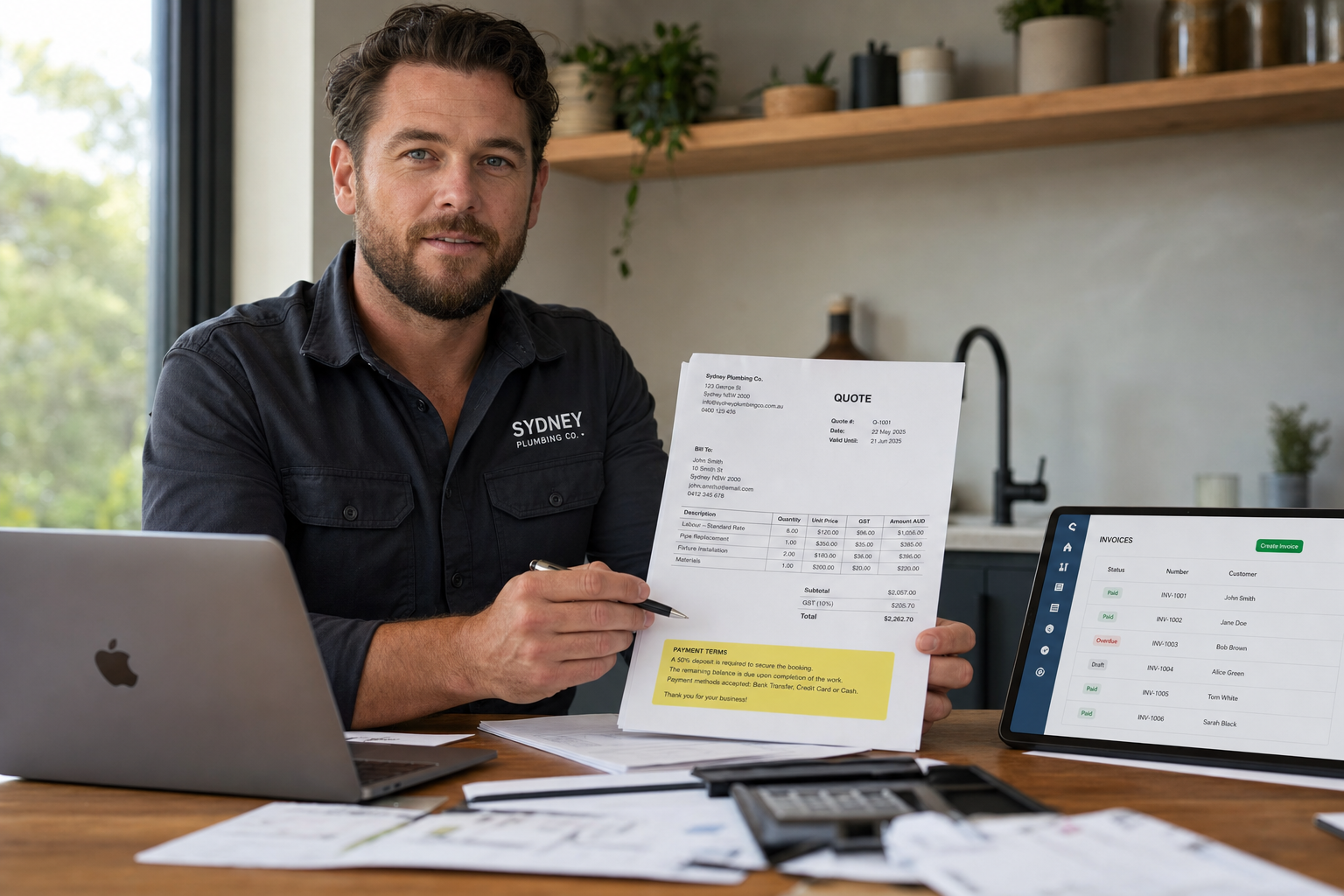
Prevention → Chasing → Legal
Before you start:
- Payment terms on your quote ("Payment due within 7 days of invoice")
- Deposits for jobs $500+ (30–50%)
- Payment on completion for small jobs (under $500)
Day of completion:
- Send invoice same day — don't wait
If payment is late:
- Day 1–3 overdue: Friendly nudge (email or text)
- Day 7 overdue: Firmer text message ("When can we expect payment?")
- Day 14+: Phone call, direct conversation
If they still won't pay:
- Send letter of demand (14 days to pay)
- Lodge with small claims tribunal if no response
- Debt collection agency for large amounts ($500+)
General rule: Prevention is easier than chasing. Chasing is easier than legal. Get the prevention piece right and you almost never need the other two.
Keep reading
How to Start Your Trade Business in Australia
The complete 12-step no-BS checklist — ABN, GST, insurance, licences, and everything else.
Read more →How to Quote a Trade Job Without Losing Money
Know your costs, set your markup, present it professionally — and stop undercutting yourself.
Read more →Where to Advertise Your Trade Business in Australia
The best free and paid channels for getting your first clients — ranked by what actually works.
Read more →